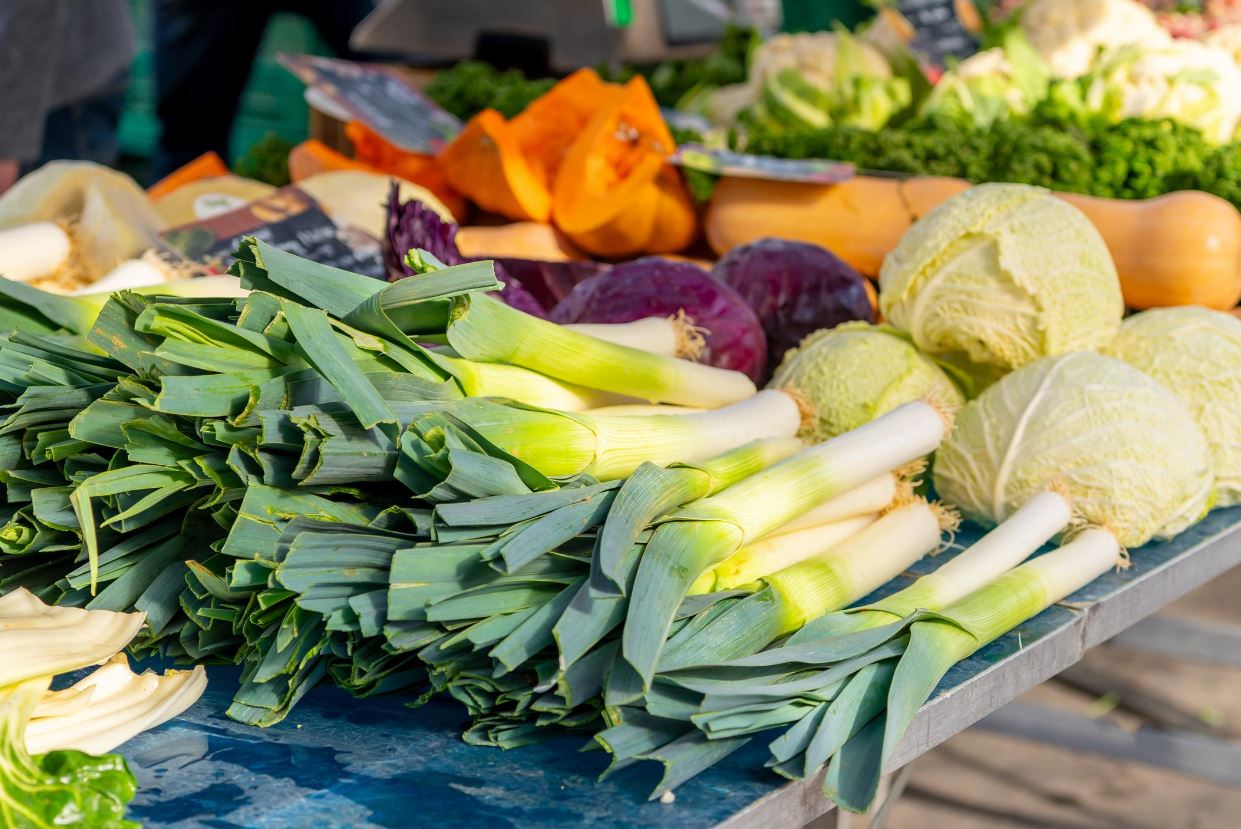
Vegetables in Season in the UK: Complete Month-by-Month Calendar
Vegetables in season in the UK change throughout the year. Winter is a good time for Brussels sprouts, leeks, kale, parsnips and swedes. Spring brings purple sprouting broccoli, spring greens, radishes and asparagus. Summer is associated with peas, broad beans, courgettes, runner beans and tomatoes. Autumn offers pumpkins, squash, beetroot, cauliflower and other vegetables suited to cooler weather.
However, a vegetable being sold in a British supermarket does not always mean it is freshly harvested in Britain.
Some vegetables are grown outdoors and picked during their natural season. Others are produced in glasshouses or polytunnels, imported from overseas, or kept in storage after an earlier British harvest.
This UK seasonal vegetable calendar explains which vegetables to look for each month from January through December, how British growing seasons work, what to cook with seasonal produce and how to store vegetables to reduce waste.
Whether you shop at Tesco, Sainsbury's, Aldi, Lidl, a farmers' market or a local greengrocer, it will help you understand the difference between seasonal availability and genuinely British-grown produce.
UK Seasonal Vegetables Calendar: Quick Reference
If you want to know what's typically in season right now, start with this overview.
| Month | Seasonal vegetables to look for |
|---|---|
| January | Leeks, kale, Brussels sprouts, parsnips, cabbage, swedes |
| February | Leeks, purple sprouting broccoli, kale, cabbage, celeriac |
| March | Purple sprouting broccoli, spring greens, leeks, watercress, radishes |
| April | Purple sprouting broccoli, spring greens, spinach, radishes, watercress |
| May | Asparagus, spinach, radishes, spring onions, lettuce, new potatoes |
| June | Broad beans, peas, lettuce, asparagus, courgettes, early potatoes |
| July | Courgettes, runner beans, French beans, tomatoes, beetroot, peas |
| August | Tomatoes, courgettes, sweetcorn, runner beans, peppers, beetroot |
| September | Pumpkins, squash, sweetcorn, tomatoes, leeks, potatoes |
| October | Pumpkins, winter squash, kale, cauliflower, leeks, parsnips |
| November | Brussels sprouts, parsnips, swedes, cabbage, leeks, celeriac |
| December | Brussels sprouts, parsnips, carrots, red cabbage, leeks, swedes |
This is a simplified shopping calendar, not an exhaustive harvest record.
Some items may be freshly harvested, some stored, and others grown under protection. The detailed monthly sections below explain those distinctions.
Sources: British Dietetic Association seasonal guide and Royal Horticultural Society harvesting resources.
What Does “In Season” Mean in the UK?
The expression in season is used in several ways, and these meanings are not interchangeable.
1. Freshly Harvested British Vegetables
These are vegetables harvested from UK-grown crops during the current period.
For example, British runner beans are typically associated with summer, while leeks and hardy brassicas can be harvested through colder months.
Exact harvest dates vary by location, variety and weather.
2. British Vegetables Available From Storage
Certain vegetables can remain available for months after harvesting.
Maincrop potatoes, onions, carrots, beetroot and winter squash are examples of vegetables that can be stored under suitable conditions.
A British-grown carrot sold in February might have been harvested the previous autumn.
It is still British produce, but it is not necessarily freshly harvested.
3. Protected British-Grown Vegetables
Commercial growers may use glasshouses, polytunnels and other forms of protection to extend growing periods.
Tomatoes, cucumbers, peppers, lettuce and certain other crops can be grown under protection.
However, protected cultivation does not guarantee year-round British production of every crop.
4. Imported Vegetables
UK supermarkets regularly sell vegetables grown abroad.
This allows customers to buy produce outside its typical British harvest period.
For example, courgettes and tomatoes may be imported during colder months.
Availability in the supermarket should not be used as proof of local seasonality.
How to Identify British-Grown Vegetables
Check the country-of-origin information on packaging or shelf labels.
A label stating “British grown” is more informative about origin than a marketing phrase such as “seasonal selection”.
At farmers' markets, ask growers whether the vegetable was harvested recently, grown under protection or kept in storage.
January: What Vegetables Are in Season in the UK?
January is dominated by hardy winter vegetables and stored autumn produce.
The colder weather suits vegetables that can withstand low temperatures, while stored roots provide reliable ingredients for soups, casseroles and roasted meals.
January Seasonal Vegetable Table
| Vegetable | Typical source in January | Good ways to use it |
|---|---|---|
| Leeks | Winter field harvest | Leek and potato soup, gratins |
| Kale | Hardy winter crop | Soups, steamed greens |
| Brussels sprouts | Winter harvest | Roasted or steamed |
| Winter cabbage | Hardy harvest or stored | Braised cabbage, slaw |
| Parsnips | Winter field harvest or stored | Roasted parsnips |
| Swedes | Field harvest or stored roots | Mash, stews |
| Carrots | Primarily stored UK crop | Soups, roasting |
| Beetroot | Stored crop | Roasted beetroot, salads |
| Celeriac | Winter harvest or stored | Mash, soup |
| Onions | Stored crop | Everyday cooking |
| Winter squash | Stored autumn harvest | Roasted squash, soup |
Best January choices: Leeks, parsnips, Brussels sprouts and kale.
Meal idea: Make a winter vegetable traybake using parsnips, carrots, swede and onions.
If you're specifically seeking freshly picked British vegetables, ask about leeks, kale and winter brassicas rather than assuming stored carrots were harvested that week.
February: Vegetables in Season in the UK
February remains a winter growing period, but early purple sprouting broccoli may begin appearing, especially in suitable regions and conditions.
Many vegetables available in January remain useful in February.
February Seasonal Vegetable Table
| Vegetable | Typical source | Good ways to use it |
|---|---|---|
| Purple sprouting broccoli | Late-winter or early-spring harvest | Steamed with lemon |
| Leeks | Winter harvest | Soups, pies |
| Kale | Hardy crop | Sautéed greens |
| Brussels sprouts | Late winter harvest | Roasted sprouts |
| Cabbage | Winter harvest or storage | Colcannon, braised cabbage |
| Parsnips | Winter harvest or stored | Roasted roots |
| Celeriac | Winter or stored crop | Celeriac remoulade |
| Swedes | Winter or stored crop | Root vegetable mash |
| Carrots | Stored crop | Soups and stews |
| Jerusalem artichokes | Winter-harvested tubers | Roasted or made into soup |
Best February choices: Purple sprouting broccoli, leeks, cabbage and celeriac.
Meal idea: Prepare purple sprouting broccoli with a baked potato and a suitable protein source.
Purple sprouting broccoli harvest timing varies by variety, so it may be more readily available in March than in early February.
March: Vegetables in Season in the UK
March is a transition between winter and spring.
Some overwintered vegetables remain available, while fresh spring growth begins to increase.
The weather remains unpredictable, and late frosts can affect crops.
March Seasonal Vegetable Table
| Vegetable | Typical source | Good ways to use it |
|---|---|---|
| Purple sprouting broccoli | Fresh late-winter/spring harvest | Steamed or roasted |
| Spring greens | Spring harvest | Lightly cooked with garlic |
| Leeks | Late winter harvest | Leek soup |
| Watercress | British-grown leafy crop, including managed production | Salads, soup |
| Radishes | Early spring, depending on conditions or protection | Crunchy salads |
| Spring onions | Early or protected crops | Garnishes, stir-fries |
| Chard | Overwintered or protected crop | Sautéed greens |
| Cabbage | Winter/spring varieties | Braised cabbage |
| Carrots | Stored UK crop | Roasted carrots |
| Beetroot | Stored crop | Beetroot salad |
Best March choices: Purple sprouting broccoli and spring greens.
Meal idea: Serve purple sprouting broccoli with spring greens and a simple mustard dressing.
March is a useful month to look for fresh leafy vegetables, but their supply may be limited by local weather.
April: Vegetables in Season in the UK
April brings more spring vegetables.
Radishes, spinach, salad leaves and watercress become increasingly appealing, while overwintered crops can remain available.
Some early new potatoes may appear towards the end of spring, depending on region and production method.
April Seasonal Vegetable Table
| Vegetable | Typical source | Good ways to use it |
|---|---|---|
| Purple sprouting broccoli | Spring harvest | Roasted or steamed |
| Spring greens | Spring harvest | Sautéed greens |
| Spinach | Fresh or protected crop | Omelettes, salads |
| Radishes | Spring harvest | Salads |
| Rocket | Fresh or protected leafy crop | Salads, pesto |
| Watercress | Managed British crop | Soup, sandwiches |
| Spring onions | Spring harvest | Stir-fries, salads |
| Chard | Overwintered or early crop | Cooked leaves and stalks |
| Leeks | Tail end of winter harvest | Soups |
| New potatoes | Early or protected production, availability varies | Boiled with herbs |
Best April choices: Spinach, purple sprouting broccoli, radishes and spring greens.
Meal idea: Make a warm spring salad with early potatoes, radishes and watercress.
Be cautious with labels such as “new potatoes”: they describe a type or stage of harvest, but the potatoes may be imported rather than British-grown.
May: Vegetables in Season in the UK
May is one of the most anticipated months for seasonal British vegetables.
Asparagus becomes a particularly distinctive crop, while salad vegetables and new potatoes become more widely available.
May Seasonal Vegetable Table
| Vegetable | Typical source | Good ways to use it |
|---|---|---|
| Asparagus | Fresh British spring harvest | Steamed, grilled |
| Radishes | Spring harvest | Salads, sandwiches |
| Spinach | Spring harvest | Wilted spinach |
| Spring onions | Fresh spring harvest | Salad bowls |
| Lettuce | Outdoor or protected harvest | Salads |
| Rocket | Spring leafy crop | Salads and pesto |
| Watercress | British crop | Soup, sandwiches |
| New potatoes | Early British crop, depending on location | Boiled or steamed |
| Spring greens | Spring harvest | Lightly cooked |
| Peas | Early crops possible late month; main season later | Risotto, side dishes |
| Aubergines | Mainly protected or imported at this stage | Roasted aubergine |
Best May choices: British asparagus, radishes and lettuce.
Meal idea: Serve asparagus with new potatoes, spring onions and a lemon dressing.
If you are trying to buy British-grown aubergines, tomatoes or peppers in May, check their origin: much of the supermarket supply may be imported or produced under protection.
June: Vegetables in Season in the UK
June brings the beginning of the main summer vegetable season.
Broad beans, peas, salad crops and early potatoes can be abundant.
Courgettes and other warm-season vegetables begin appearing as growing conditions improve.
June Seasonal Vegetable Table
| Vegetable | Typical source | Good ways to use it |
|---|---|---|
| Broad beans | Fresh British harvest | Salads, pasta |
| Peas | Early summer harvest | Pea soup, risotto |
| Asparagus | End of main spring season | Grilled asparagus |
| Lettuce | Fresh summer harvest | Salads |
| Radishes | Spring/summer harvest | Salads |
| New potatoes | Fresh early crop | Potato salad |
| Courgettes | Early outdoor or protected harvest | Grilled, sautéed |
| French beans | Early summer, location dependent | Steamed side dish |
| Cauliflower | Seasonal harvest | Roast cauliflower |
| Broccoli | Summer crops, depending on variety | Steamed florets |
| Cucumber | Protected or suitable outdoor production | Salads |
| Swiss chard | Fresh leafy harvest | Cooked greens |
Best June choices: Broad beans, peas, new potatoes and lettuce.
Meal idea: Prepare a salad with new potatoes, broad beans, peas and chopped fresh herbs.
June is a good month to begin buying more freshly harvested British vegetables rather than relying mostly on stored winter roots.
July: Vegetables in Season in the UK
July offers a wide variety of fresh British vegetables.
Many crops are now in active production, including beans, courgettes, tomatoes and salad vegetables.
July Seasonal Vegetable Table
| Vegetable | Typical source | Good ways to use it |
|---|---|---|
| Courgettes | Summer harvest | Grilled or roasted |
| Runner beans | Summer harvest | Steamed or sliced |
| French beans | Summer harvest | Salads, side dishes |
| Broad beans | Summer harvest | Salads, pasta |
| Peas | Summer harvest | Fresh side dishes |
| Tomatoes | Outdoor or protected British crops | Salads, sauces |
| Cucumber | Protected or outdoor summer crops | Salads |
| Beetroot | Fresh summer harvest | Roasted, pickled |
| Carrots | Fresh summer harvest | Raw or roasted |
| New potatoes | Fresh harvest | Potato salad |
| Kohlrabi | Summer harvest | Slaw |
| Fennel | Summer harvest | Roasted or thinly sliced |
| Cauliflower | Summer harvest, depending on variety | Roasting |
| Spring onions | Fresh harvest | Stir-fries and salads |
Best July choices: Courgettes, runner beans, tomatoes and beetroot.
Meal idea: Roast courgettes and tomatoes, then serve with French beans and new potatoes.
Some summer crops are much more plentiful in southern and eastern Britain than in cooler northern areas.
August: Vegetables in Season in the UK
August is typically one of the most productive periods for British summer vegetables.
Courgettes, runner beans, sweetcorn, tomatoes and several other crops can be widely available.
August Seasonal Vegetable Table
| Vegetable | Typical source | Good ways to use it |
|---|---|---|
| Tomatoes | Outdoor or protected UK harvest | Salads, sauces |
| Courgettes | Summer harvest | Courgette fritters |
| Runner beans | Summer harvest | Steamed beans |
| French beans | Summer harvest | Salads |
| Sweetcorn | Fresh late-summer harvest | Grilled or boiled |
| Beetroot | Summer harvest | Roasted beetroot |
| Carrots | Fresh harvest | Raw sticks, roasting |
| Peppers | Mainly protected British harvest where locally grown | Stuffed peppers |
| Aubergines | Mainly protected British production where locally grown | Grilled aubergine |
| Potatoes | New and maincrop harvests | Roasted, mashed |
| Marrow | Summer harvest | Stuffed marrow |
| Fennel | Summer harvest | Roasted or raw |
| Cauliflower | Seasonal harvest | Cauliflower cheese |
| Chard | Summer harvest | Wilted greens |
Best August choices: Tomatoes, sweetcorn, courgettes and runner beans.
Meal idea: Make a summer vegetable traybake with courgettes, tomatoes, peppers and aubergines.
British-grown peppers and aubergines usually depend on suitable commercial growing conditions, so check origin labels.
September: Vegetables in Season in the UK
September is the transition from summer to autumn.
Warm-season crops may still be productive, while pumpkins, squash, leeks and maincrop potatoes become increasingly relevant.
September Seasonal Vegetable Table
| Vegetable | Typical source | Good ways to use it |
|---|---|---|
| Pumpkins | Autumn harvest begins | Soup, roasting |
| Butternut squash | Autumn harvest | Roasted squash |
| Sweetcorn | Late-summer harvest | Corn on the cob |
| Tomatoes | Late-summer harvest | Pasta sauce |
| Courgettes | Late-summer harvest | Fritters, soup |
| Runner beans | Late-summer harvest | Steamed beans |
| Potatoes | Maincrop harvest | Mash, roast potatoes |
| Carrots | Fresh autumn harvest | Roasted carrots |
| Beetroot | Fresh autumn harvest | Salads |
| Leeks | Autumn harvest begins | Leek soup |
| Kale | Autumn crop | Sautéed greens |
| Cauliflower | Autumn harvest | Cauliflower cheese |
| Cabbage | Autumn varieties | Slaw, braised cabbage |
| Onions | Newly harvested or curing for storage | Soups, sauces |
Best September choices: Squash, maincrop potatoes, beetroot and late-season tomatoes.
Meal idea: Make a roasted autumn vegetable dish with butternut squash, beetroot and onions.
Early autumn is also when growers begin storing certain crops for use during colder months.
October: Vegetables in Season in the UK
October brings more cold-tolerant vegetables and autumn roots.
Pumpkins are especially visible around Halloween, while kale, leeks, cauliflower and parsnips become increasingly important in seasonal cooking.
October Seasonal Vegetable Table
| Vegetable | Typical source | Good ways to use it |
|---|---|---|
| Pumpkins | Fresh autumn harvest | Pumpkin soup |
| Winter squash | Fresh harvest or newly stored | Roasted squash |
| Kale | Autumn harvest | Soups, greens |
| Leeks | Autumn/winter harvest | Leek and potato soup |
| Cauliflower | Autumn harvest | Cauliflower cheese |
| Cabbage | Autumn/winter varieties | Braised cabbage |
| Parsnips | Autumn harvest | Roasted roots |
| Swedes | Autumn harvest | Mash |
| Celeriac | Autumn harvest | Soup, mash |
| Carrots | Fresh or stored | Roasted carrots |
| Beetroot | Fresh or stored | Salads, roasting |
| Potatoes | Stored maincrop or late harvest | Roast potatoes |
| Brussels sprouts | Early autumn harvest, dependent on variety | Roasted sprouts |
| Chard | Autumn harvest | Cooked greens |
Best October choices: Pumpkins, winter squash, leeks and kale.
Meal idea: Prepare a thick pumpkin, carrot and leek soup.
Some tomatoes, courgettes and runner beans may continue into October in mild conditions, but frost can bring outdoor production to an end.
November: Vegetables in Season in the UK
November brings a strong selection of hardy vegetables and stored roots.
This is a good period for warming soups, stews, roasted vegetables and traditional British winter dishes.
November Seasonal Vegetable Table
| Vegetable | Typical source | Good ways to use it |
|---|---|---|
| Brussels sprouts | Fresh autumn/winter harvest | Roasted sprouts |
| Leeks | Winter harvest | Soups, gratins |
| Kale | Hardy winter harvest | Cooked greens |
| Cabbage | Winter harvest or stored | Braised cabbage |
| Parsnips | Field harvest or stored | Roasting |
| Swedes | Field harvest or stored | Mash |
| Celeriac | Autumn/winter crop | Celeriac soup |
| Carrots | Stored UK crop | Roasting, soups |
| Beetroot | Stored crop | Beetroot salad |
| Jerusalem artichokes | Late-autumn harvest | Soup, roasting |
| Cauliflower | Suitable autumn/winter crop | Cauliflower cheese |
| Potatoes | Stored maincrop | Jacket potatoes |
| Winter squash | Stored autumn crop | Roasted or puréed |
Best November choices: Leeks, Brussels sprouts, parsnips and celeriac.
Meal idea: Roast Brussels sprouts, parsnips and carrots, then serve with a main dish of your choice.
The Royal Horticultural Society recommends planning winter crops well in advance, particularly long-season vegetables such as Brussels sprouts and leeks.
December: Vegetables in Season in the UK
December is associated with traditional winter vegetables, including many commonly served at Christmas.
Hardy crops and carefully stored autumn vegetables provide a useful range of choices.
December Seasonal Vegetable Table
| Vegetable | Typical source | Good ways to use it |
|---|---|---|
| Brussels sprouts | Fresh winter harvest | Roasted or steamed |
| Parsnips | Winter harvest or stored | Roast parsnips |
| Leeks | Winter harvest | Leek gratin |
| Red cabbage | Winter harvest or stored | Braised red cabbage |
| Kale | Winter harvest | Sautéed greens |
| Swedes | Harvest or storage | Swede mash |
| Carrots | Stored UK crop | Roasted carrots |
| Celeriac | Winter harvest or stored | Celeriac mash |
| Beetroot | Stored crop | Salads, roasting |
| Jerusalem artichokes | Winter harvest | Soup |
| Turnips | Winter harvest | Roasting, mash |
| Potatoes | Stored maincrop | Roast potatoes |
| Winter squash | Stored autumn crop | Soup, roasting |
Best December choices: Brussels sprouts, parsnips, red cabbage and leeks.
Meal idea: Prepare a classic winter vegetable plate with Brussels sprouts, roasted parsnips, carrots and braised red cabbage.
Although potatoes are a traditional British Christmas food, those sold in December are often from crops harvested earlier in the year.
What Vegetables Are in Season During Each UK Season?
Monthly tables are useful when shopping, but it also helps to recognise the main seasonal patterns.
Spring Vegetables in the UK: March to May
Spring is associated with fresh leafy growth and early crops.
Look for:
Purple sprouting broccoli.
Spring greens.
Spinach.
Radishes.
Rocket.
Watercress.
Spring onions.
Asparagus, particularly in May.
Early new potatoes, as available.
These vegetables work well in salads, lighter soups and gently cooked dishes.
Summer Vegetables in the UK: June to August
Summer typically offers the widest range of tender freshly harvested vegetables.
Popular choices include:
Peas and broad beans.
French beans and runner beans.
Courgettes.
Tomatoes.
Cucumbers.
Lettuce.
Beetroot.
Sweetcorn.
New potatoes.
Peppers and aubergines, especially from protected production.
The availability of individual crops depends on the region and growing method.
Autumn Vegetables in the UK: September to November
Autumn brings a combination of late-summer produce and cooler-season vegetables.
Look for:
Pumpkins.
Butternut squash.
Potatoes.
Beetroot.
Carrots.
Leeks.
Kale.
Cabbage.
Cauliflower.
Parsnips.
Brussels sprouts.
Autumn is also an important season for harvesting crops intended for winter storage.
Winter Vegetables in the UK: December to February
Winter is particularly associated with hardy brassicas, leeks and roots.
Options include:
Brussels sprouts.
Kale.
Winter cabbage.
Leeks.
Parsnips.
Swedes.
Turnips.
Celeriac.
Jerusalem artichokes.
Stored carrots, onions, potatoes and squash.
The RHS notes that several hardy vegetables can remain in the ground through winter, while others must be stored after harvesting.
Which British Vegetables Are Available All Year?
Some vegetables may be available year-round in UK supermarkets, but that does not mean they're freshly harvested outdoors in Britain all year.
Onions, potatoes, carrots and cabbage are often available for much of the year because of storage, staggered harvests or other supply arrangements.
Tomatoes, cucumbers and peppers are also widely available throughout the year because supermarkets source them from different growing regions or protected production systems.
Year-Round Availability vs. British Harvest Season
| Vegetable | Why you may see it all year |
|---|---|
| Potatoes | Storage and different harvest periods |
| Carrots | Storage, staggered production and imports |
| Onions | Long storage life and imports |
| Cabbage | Seasonal varieties, storage and imports |
| Tomatoes | Protected British production and imports |
| Cucumbers | Protected production and imports |
| Peppers | Protected production and imports |
| Broccoli | Different varieties and import supply |
| Mushrooms | Managed indoor cultivation rather than a field-harvest season |
The most reliable way to check whether an item is British-grown is to examine the country-of-origin information.
UK Seasonal Vegetable Names vs. American Names
British and American vegetable terminology can differ.
This matters when researching recipes, seasonal growing calendars and shopping guides.
| UK name | Common US equivalent |
|---|---|
| Courgette | Zucchini |
| Aubergine | Eggplant |
| Rocket | Arugula |
| Swede | Rutabaga |
| Beetroot | Beets |
| Spring onions | Scallions or green onions |
| Coriander leaves | Cilantro |
| Mangetout | Snow peas |
| French beans | Green beans, depending on type |
| Broad beans | Fava beans |
| Butter beans | Lima beans |
| Marrow | Mature summer squash, often courgette-type |
| Jacket potato | Baked potato |
These are common translations rather than exact equivalents in every horticultural context.
For example, marrow commonly describes certain cultivars or mature forms of summer squash rather than a single botanical species.
For a UK-targeted article, use the British name first and give the American equivalent when useful.
How to Buy Seasonal British Vegetables
The easiest way to shop seasonally is to combine a calendar with the information supplied by your retailer or grower.
Check Country of Origin
Look for UK-origin labels rather than assuming that a familiar vegetable is British-grown.
Visit a Local Greengrocer or Farmers' Market
Independent sellers may be able to explain where vegetables were grown and when they were picked.
Ask About Storage
There's nothing inherently wrong with buying stored British vegetables.
Knowing whether a crop was harvested recently simply helps you understand what you're buying.
Be Flexible With Your Shopping List
Instead of insisting on one vegetable, choose among several suitable seasonal options.
For example, use leeks in place of certain other alliums in winter soups, or choose courgettes instead of imported summer squash when local supply is plentiful.
Check Quality
Select vegetables appropriate to the intended use.
For leafy greens, look for leaves in good condition.
For root vegetables, check for serious damage or decay.
For winter squash, select sound produce suitable for storage.
How to Store Seasonal Vegetables
Proper storage helps reduce food waste and preserves quality.
The best conditions depend on the vegetable.
UK Vegetable Storage Guide
| Vegetable type | General storage approach | Useful note |
|---|---|---|
| Salad leaves | Refrigerate promptly | Use delicate leaves relatively quickly |
| Broccoli and cauliflower | Refrigerate | Keep cool; avoid prolonged storage |
| Leeks | Refrigerate | Trim and wash when preparing |
| Carrots | Refrigerate for household storage | Remove leafy tops if attached |
| Fresh peas and beans | Refrigerate | Usually best used promptly |
| Tomatoes | Store according to ripeness and room conditions | Refrigeration may help extend life when fully ripe; quality can change |
| Potatoes | Cool, dark, dry, ventilated place | Avoid light exposure and greening |
| Dry onions | Cool, dry, ventilated storage | Avoid trapping moisture |
| Winter squash | Suitable cool, dry, ventilated location | Only sound, mature squash stores well |
| Cut vegetables | Refrigerate in a suitable container | Follow safe handling and packaging instructions |
These are general principles, not guarantees of a particular shelf life.
Storing Potatoes
The RHS recommends keeping suitable maincrop potatoes cool, dry, frost-free and in the dark.
Inspect them periodically for signs of deterioration.
Do not eat potatoes that are extensively green or show serious spoilage.
Storing Onions
Dry storage onions need ventilation.
Avoid storing them in conditions that trap moisture and encourage rotting.
Check regularly for soft or damaged bulbs.
Storing Root Vegetables
Carrots, beetroot, parsnips, swedes and turnips may be stored after harvesting, but the best storage method depends on the crop and growing conditions.
Gardeners sometimes leave hardy roots in the ground during suitable winter conditions.
Wet or severely frozen soil may make this impractical.
Storing Winter Squash
Mature winter squash can keep for an extended period when cured and stored appropriately.
Inspect stored squash regularly, and use any damaged produce promptly if it remains safe to eat.
Is Seasonal UK Produce Cheaper?
Seasonal vegetables can sometimes be good value when local supply is plentiful.
However, there is no guarantee that every seasonal vegetable will be cheaper.
Prices depend on weather, energy costs, labour, transport, retail pricing, harvest yields and other factors.
For example, a difficult growing season can reduce supplies of a normally abundant vegetable.
Imported produce may sometimes be priced competitively, and frozen produce may be economical outside the fresh harvest season.
A useful shopping strategy is to compare the cost per kilogram and the amount of food you are likely to use.
Is British Seasonal Produce More Sustainable?
Choosing seasonal British vegetables can have environmental advantages in some circumstances, but local origin alone does not determine environmental impact.
Growing method, energy use, transportation, storage, packaging, food waste and farming practices all matter.
For example, an energy-intensive heated glasshouse may have a different environmental profile from an outdoor crop grown in a suitable climate.
Similarly, vegetables held in controlled storage for many months have different requirements from produce eaten shortly after harvest.
Therefore, it's more accurate to say that seasonality and growing method can influence environmental impact rather than claiming that every British-grown seasonal vegetable is automatically the lowest-impact option.
Reducing avoidable food waste is also an important consideration.
Do Seasonal UK Vegetables Count Towards 5 A Day?
Yes.
The NHS recommends eating at least five portions of a variety of fruit and vegetables each day.
For adults, a standard portion of most fresh, frozen or tinned vegetables is approximately 80 grams.
Examples include:
Two broccoli spears.
Three heaped tablespoons of cooked carrots or peas.
A medium tomato.
A suitable portion of cooked cabbage or green beans.
Potatoes do not count towards the UK's 5 A Day target because they are generally used as a starchy component of a meal.
Sweet potatoes, parsnips, swedes and turnips do count.
Seasonal British vegetables can help households eat a variety of foods throughout the year.
How to Eat Seasonal Vegetables Throughout the Year
A useful approach is to adapt familiar recipes to what is available.
Winter
Choose hearty vegetable soups, roasted roots, braised cabbage and leek dishes.
Spring
Try asparagus, spinach, radishes, watercress and purple sprouting broccoli in lighter meals.
Summer
Use courgettes, beans, tomatoes, new potatoes and other fresh vegetables in salads and traybakes.
Autumn
Prepare pumpkin soup, roasted squash, cauliflower cheese and mixed root vegetables.
Using seasonal alternatives can make everyday cooking more varied without requiring complicated recipes.
Regional Differences in UK Vegetable Seasons
The United Kingdom does not have one identical harvest calendar.
Growing conditions vary considerably between different regions.
Southern England
Milder conditions can allow some crops to begin earlier or continue later, particularly when supported by suitable growing methods.
Northern England
Cooler temperatures may delay the start of some spring and summer crops compared with southern areas.
Scotland
Shorter warm growing periods and regional temperature differences can affect outdoor production, although local conditions vary considerably.
Wales
Coastal, lowland and upland growing conditions differ, influencing planting and harvest timing.
Northern Ireland
Maritime weather conditions and local growing methods affect harvest periods.
Elevation, exposure, rainfall, soil type, cultivar and growing protection may be just as important as the broader region.
Use the month-by-month guide as a UK-wide starting point, not a guaranteed local harvest schedule.
Can You Grow Seasonal Vegetables at Home?
Yes.
Many British seasonal vegetables are suitable for home gardens, allotments, raised beds and containers.
However, sowing a crop and harvesting it are different events.
For example, Brussels sprouts intended for winter meals may need to be started in spring.
Likewise, purple sprouting broccoli can require a long growing period before its late-winter or spring harvest.
The RHS provides vegetable crop planners explaining typical sowing, planting and harvesting periods.
Gardeners should use variety-specific instructions and adapt schedules to local conditions.
This article focuses on when vegetables are available to eat, rather than providing a full vegetable sowing calendar.
Frequently Asked Questions About Vegetables in Season in the UK
What vegetables are in season in the UK right now?
In October, typical British seasonal choices include pumpkins, winter squash, kale, leeks, cauliflower, parsnips, carrots and beetroot. Actual availability varies by region, growing method and retailer.
What vegetables are in season in January?
Leeks, kale, Brussels sprouts, winter cabbage, parsnips, swedes and celeriac are useful winter choices. Carrots, onions, potatoes and squash may be available from storage.
What vegetables are in season in February?
Look for leeks, kale, cabbage, celeriac and early purple sprouting broccoli, alongside stored winter roots.
What vegetables are in season in March?
Purple sprouting broccoli, spring greens, watercress, leeks and certain early salad crops are associated with March.
What vegetables are in season in April?
Spinach, spring greens, radishes, rocket, watercress and purple sprouting broccoli are useful April choices.
What vegetables are in season in May?
May is particularly associated with British asparagus, radishes, spinach, lettuce, spring onions and the start of the early potato season.
What vegetables are in season in June?
Peas, broad beans, lettuce, new potatoes and early courgettes are common June choices, with harvests varying by local conditions.
What vegetables are in season in July?
Courgettes, runner beans, French beans, tomatoes, beetroot, carrots and new potatoes are typical July vegetables.
What vegetables are in season in August?
August is a strong month for tomatoes, courgettes, runner beans, sweetcorn, beetroot and other summer vegetables.
What vegetables are in season in September?
Pumpkins, winter squash, sweetcorn, potatoes, beetroot, carrots and late-season tomatoes are common September choices.
What vegetables are in season in October?
Pumpkins, butternut squash, leeks, kale, cauliflower, parsnips, swedes and celeriac are typical October vegetables.
What vegetables are in season in November?
Brussels sprouts, cabbage, leeks, kale, celeriac, parsnips and swedes are useful November choices.
What vegetables are in season in December?
Brussels sprouts, leeks, parsnips, swedes, red cabbage and stored carrots and potatoes are common December options.
Which vegetables are in season all year in Britain?
No single field-grown vegetable has an identical fresh outdoor harvest pattern everywhere throughout the year. Supermarkets may provide year-round availability through storage, protected production and imports.
Are British tomatoes seasonal?
Yes. British tomatoes have a growing and harvesting season, but protected production can extend availability. Supermarkets may also import tomatoes outside the British season.
When is British asparagus in season?
British asparagus is especially associated with late spring, often April through June, with May being a particularly familiar month. Timing varies by weather, location and production method.
When are British courgettes in season?
Courgettes are mainly a summer crop, commonly available from British harvests around June to September, depending on conditions.
When is British sweetcorn in season?
Fresh British sweetcorn is mainly associated with late summer and early autumn.
When is purple sprouting broccoli in season?
Purple sprouting broccoli is particularly associated with late winter and spring, commonly February through April depending on variety and location.
When are pumpkins in season in the UK?
Pumpkins are primarily harvested in autumn, often September and October, although stored pumpkins and winter squash may remain available afterwards.
When are Brussels sprouts in season?
Brussels sprouts are a cool-season crop, commonly harvested during autumn and winter, with variety and location affecting the precise period.
Are potatoes seasonal in the UK?
Yes. Potatoes have distinct harvesting periods, including first earlies, second earlies and maincrop varieties. Suitable maincrop potatoes can be stored and sold for months after harvest.
Are seasonal vegetables always British-grown?
No. Retailers may sell seasonal vegetables imported from other countries. Check the country-of-origin label.
Are seasonal vegetables always fresher?
Not necessarily. Freshness depends on harvest date, transport, storage and retail handling, not just whether a vegetable is considered seasonal.
Do frozen vegetables count as seasonal?
Frozen vegetables may have been harvested during their natural season and preserved for later use. They can also contribute towards a varied diet.
Are seasonal vegetables cheaper?
Sometimes, particularly when supply is abundant, but seasonal availability does not guarantee lower prices.
How can I find locally grown vegetables?
Check country-of-origin information, visit local growers and farmers' markets, and ask sellers about growing locations and harvest periods.
Does eating seasonal vegetables help with 5 A Day?
Yes. Most seasonal fresh, frozen and tinned vegetables can contribute towards the NHS's 5 A Day target, subject to its portion and food-group rules.
Conclusion
Vegetables in season in the UK change throughout the year, from leeks, kale and Brussels sprouts in winter to asparagus in spring, beans and courgettes in summer, and pumpkins and squash in autumn.
The best seasonal choices depend on the month, location, weather and whether a crop is freshly harvested, grown under protection or available from storage.
A vegetable being available in a supermarket does not necessarily mean it is currently being picked from a British field.
Use the month-by-month tables to plan meals, explore familiar British vegetables and make informed shopping choices.
Check origin labels when buying locally grown produce matters to you, and store vegetables correctly to minimise avoidable waste.
The most useful seasonal shopping habit is simple: check what's being harvested, stay flexible with your recipes and choose vegetables you'll actually enjoy eating.