Types of Cabbage: 12 Varieties, Pictures, Flavours and Best Uses
The main types of cabbage are green cabbage, red cabbage, Savoy cabbage and Napa cabbage. However, there are many additional varieties and cultivar groups, including white cabbage, pointed cabbage, sweetheart cabbage, January King, spring cabbage and Taiwanese flat cabbage.
These cabbages are not identical.
Some have dense, round heads with smooth leaves. Others have wrinkled, tender leaves, elongated shapes or pointed heads. Their flavours range from mild and sweet to peppery, and some are better suited to particular cooking methods.
For example, standard green cabbage is an excellent all-purpose choice for coleslaw, soups and stir-fries. Red cabbage is useful for colourful salads and braised dishes. Savoy cabbage has tender crinkled leaves that work well in cabbage rolls, while Napa cabbage is particularly popular for kimchi, dumplings and Asian-style soups.
There is also an important botanical difference: most familiar European headed cabbages belong to Brassica oleracea, while Napa cabbage belongs to Brassica rapa.
This guide explains 12 types of cabbage, their appearance, flavour, texture, culinary uses, storage and differences in American and British naming. It also includes a quick comparison chart to help you select the right cabbage for your next recipe.
Types of Cabbage at a Glance
The following chart includes both broad cabbage categories and named cultivars or regional types.
They are not 12 separate botanical species.
| Type of cabbage | Appearance | Flavour and texture | Best uses |
|---|---|---|---|
| Green cabbage | Round, smooth, green head | Crisp, mild, slightly peppery raw | Coleslaw, soups, stir-fries |
| Red cabbage | Dense, purple-red head | Firm, crunchy, slightly peppery | Slaw, pickling, braising |
| Savoy cabbage | Round, crinkled green leaves | Tender, mild, slightly sweet | Steaming, cabbage rolls |
| Napa cabbage | Elongated, pale-green head | Succulent, mild, crisp ribs | Kimchi, dumplings, soups |
| White cabbage | Pale-green to whitish dense head | Firm, crunchy, mild | Sauerkraut, slaw |
| Pointed cabbage | Cone-shaped head | Tender, sweet, delicate | Quick stir-fries, grilling |
| Sweetheart cabbage | Small pointed head | Tender, mild, sweet | Sautéing, roasting |
| January King | Rounded green and purple-tinged head | Robust, mildly sweet | Winter cooking, braising |
| Spring cabbage | Small or loose green head | Fresh, tender, mild | Spring greens, steaming |
| Taiwanese flat cabbage | Broad, flattened head | Crisp, juicy, often sweet | Stir-fries, sautéing |
| Bok choy / pak choi | Open cluster with thick stalks | Juicy, mild, sometimes mustard-like | Stir-fries, soups |
| Baby Napa cabbage | Small, compact elongated head | Tender, mild, sweet | Salads, quick cooking |
Classification note: Bok choy is included as a closely related cabbage-family vegetable that shoppers may encounter under the term Chinese cabbage. It is not the same cultivar group as Napa cabbage. Sweetheart and pointed cabbage can also overlap in market naming, while baby Napa is a size or cultivar category rather than a separate species.
1. Green Cabbage
Botanical classification: Brassica oleracea, Capitata Group.
Green cabbage is one of the most familiar cabbage types sold in the United States and United Kingdom.
It generally has a round, compact head with smooth outer leaves and a tightly packed, paler interior.
The outer leaves may be medium to dark green, while the inner leaves are often light green or nearly white.
What Does Green Cabbage Taste Like?
Raw green cabbage is crunchy and may taste slightly peppery.
Cooking softens the leaves and can produce a milder, sweeter flavour.
The final taste depends on the cultivar, maturity and preparation method.
Best Ways to Use Green Cabbage
Traditional coleslaw.
Vegetable soups.
Stir-fries.
Cabbage rolls.
Steamed cabbage.
Fermented sauerkraut.
Green cabbage is the best all-purpose option for someone who wants one cabbage that can be used in several different dishes.
Can You Eat It Raw?
Yes. Properly washed green cabbage is commonly shredded for salads and coleslaw.
Use fresh, sound leaves and follow normal produce-handling precautions.
2. Red Cabbage
Botanical classification: Brassica oleracea, Capitata Group.
Red cabbage has tightly packed purple-red leaves and a dense, round or oval head.
The colour comes largely from anthocyanin pigments.
Depending on soil conditions, food acidity and preparation, the leaves may appear reddish, purple or bluish.
What Does Red Cabbage Taste Like?
Red cabbage usually has a firm, crunchy texture.
Raw leaves may taste slightly peppery.
Cooking can soften them, although many red cabbages remain relatively robust.
Best Ways to Use Red Cabbage
Red cabbage is particularly suitable for:
Colourful coleslaw.
Pickled cabbage.
Braised red cabbage.
Warm winter side dishes.
Grain bowls.
Crunchy salads.
In British cooking, red cabbage is often slowly braised with apples, vinegar and spices.
In American cooking, it frequently appears in slaws and vegetable side dishes.
Does Red Cabbage Change Colour When Cooked?
Yes.
Anthocyanin pigments respond to changes in acidity.
Acidic ingredients such as vinegar or lemon juice can help maintain a reddish-purple appearance.
More alkaline conditions may shift the colour towards blue or dull purple.
This colour change is related to pigment chemistry rather than automatically indicating spoilage.
3. Savoy Cabbage
Botanical classification: Brassica oleracea, Capitata Group.
Savoy cabbage is easy to recognise because of its heavily wrinkled, crinkled or puckered leaves.
The outer leaves are often darker green, while inner leaves are paler and more tender.
Unlike many smooth-leaved cabbages, Savoy has a distinctive textured appearance.
What Does Savoy Cabbage Taste Like?
Savoy cabbage is generally mild and slightly sweet.
Its leaves can be more tender and flexible than those of dense green cabbage.
The flavour varies by maturity and cooking method.
Best Ways to Use Savoy Cabbage
Savoy works especially well for:
Steamed cabbage.
Cabbage rolls.
Stuffed cabbage leaves.
Quick sautés.
Vegetable soups.
Warm side dishes.
Its leaves can be useful for wrapping fillings because they soften when cooked.
Can You Use Savoy Instead of Green Cabbage?
Usually, yes.
Savoy can replace green cabbage in many cooked dishes.
However, it may become tender more quickly.
For raw coleslaw, its softer leaves produce a less rigid texture than conventional green cabbage.
4. Napa Cabbage
Botanical classification: Brassica rapa, Pekinensis Group.
Napa cabbage is also called Chinese cabbage, Chinese leaves, celery cabbage or wong bok.
It differs from European headed cabbages in both appearance and botanical classification.
Napa generally forms a tall or oval head with pale-green leaves and broad white midribs.
The leaves are thinner and more succulent than those of standard green cabbage.
What Does Napa Cabbage Taste Like?
Napa cabbage has a mild, gently sweet flavour.
The white ribs provide crispness, while the leafy sections become soft when cooked.
Best Ways to Use Napa Cabbage
Kimchi.
Asian-style soups.
Dumpling fillings.
Stir-fries.
Hot pots.
Fresh shredded salads.
Is Napa Cabbage the Same as Green Cabbage?
No.
Napa is usually Brassica rapa, while conventional green cabbage is Brassica oleracea.
They are related members of the mustard family but belong to different species.
Napa's leaves are generally more delicate and contain more prominent white ribs.
Can You Substitute Napa for Green Cabbage?
Yes, in some dishes.
Napa can work in soups, sautéed dishes and certain slaws.
However, its tender leaves cook more quickly and may release more water.
For a recipe requiring the firm structure of traditional green cabbage, the substitution may change the result.
5. White Cabbage
Botanical classification: Brassica oleracea, Capitata Group.
White cabbage is a common name for certain pale-green, smooth-leaved, dense-headed cabbages.
It is widely used in European cooking.
Despite the name, the outer leaves may still look green.
The inner leaves are often noticeably pale.
What Does White Cabbage Taste Like?
White cabbage is generally mild, crisp and firm.
Its dense texture makes it suitable for shredding and fermentation.
Best Uses
Sauerkraut.
Coleslaw.
Stuffed cabbage.
Cabbage casseroles.
Soups and stews.
Is White Cabbage Different From Green Cabbage?
Not always in a strict botanical sense.
White cabbage and green cabbage refer to closely related forms within the headed cabbage group.
The terms may overlap in retail usage.
In some European contexts, white cabbage refers specifically to pale, dense cultivars.
The key difference for cooking is often leaf density and texture rather than a separate botanical species.
6. Pointed Cabbage
Botanical classification: Brassica oleracea, Capitata Group.
Pointed cabbage forms an elongated, cone-shaped head rather than the familiar round cabbage head.
Its leaves are often thinner and more tender than those of dense green cabbage.
Pointed cabbage is especially familiar in British and European supermarkets.
What Does Pointed Cabbage Taste Like?
Pointed cabbage is usually mild and slightly sweet.
Its tender leaves suit quick cooking.
Best Ways to Use It
Quickly sautéed cabbage.
Roasted cabbage wedges.
Grilled pointed cabbage.
Stir-fries.
Fresh salads.
Is Pointed Cabbage the Same as Sweetheart Cabbage?
The terms often overlap.
Sweetheart cabbage commonly refers to small, compact pointed cabbages or particular cultivars sold under that name.
Not every pointed cabbage is marketed as sweetheart cabbage.
For cooking, the two are usually close substitutes when they have similar size and tenderness.
7. Sweetheart Cabbage
Botanical classification: Brassica oleracea, Capitata Group.
Sweetheart cabbage is a familiar British supermarket name, generally used for a tender, pointed cabbage.
It often has a small or medium cone-shaped head.
The leaves are smooth, tightly layered and relatively delicate.
What Does Sweetheart Cabbage Taste Like?
It is generally mild, sweet and less strongly flavoured than some mature round cabbages.
Best Ways to Use It
Sweetheart cabbage can be:
Halved and roasted.
Cut into wedges and grilled.
Finely shredded into salads.
Quickly steamed.
Sautéed with herbs.
What Is the American Equivalent?
American shoppers may find comparable produce sold as pointed cabbage, conehead cabbage or under a particular cultivar name.
The exact supermarket terminology varies.
If a British recipe calls for sweetheart cabbage, a tender pointed cabbage is generally the closest substitute.
8. January King Cabbage
Botanical classification: Brassica oleracea, Capitata Group.
January King is a recognised winter cabbage cultivar.
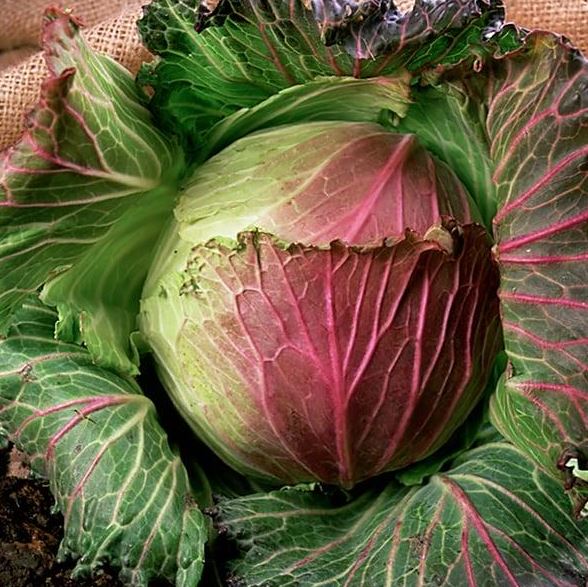
The Royal Horticultural Society describes it as a round-headed cabbage with green leaves strongly veined in pink-purple.
It is especially associated with colder-season growing and cooking.
What Does January King Look Like?
It can combine features commonly associated with Savoy-type winter cabbages and red-tinged headed cabbages.
The leaves may have a textured appearance, with distinctive purple colouring.
What Does January King Taste Like?
Its flavour is generally suitable for robust winter dishes.
The precise sweetness and texture depend on the cultivar and growing conditions.
Best Ways to Use It
Braised winter cabbage.
Steamed cabbage.
Soups and stews.
Roasted cabbage wedges.
Warm side dishes.
Is January King a Separate Cabbage Species?
No.
It is a named cultivar of headed cabbage within Brassica oleracea.
It should not be presented as a separate species.
9. Spring Cabbage and Spring Greens
Botanical classification: Brassica oleracea, Capitata Group or related headed cabbage cultivars.
Spring cabbages are grown and harvested during the spring season.
They often form smaller heads than mature autumn or winter cabbages.
Some develop pointed heads.
Others are harvested before forming a firm central head.
What Are Spring Greens?
In British cooking, spring greens commonly refers to loose leaves or immature cabbage plants harvested before a tight head forms.
They are typically tender and suitable for light cooking.
Best Ways to Use Spring Cabbage
Steamed spring greens.
Sautéed cabbage.
Vegetable soups.
Spring vegetable side dishes.
Stir-fries.
Is Spring Cabbage the Same as Savoy?
Not necessarily.
Spring cabbage describes a growing or harvesting category.
Savoy describes a distinctive crinkled-leaved cabbage type.
Some categories may overlap, but the terms describe different characteristics.
10. Taiwanese Flat Cabbage
Botanical classification: Generally Brassica oleracea, Capitata Group.
Taiwanese flat cabbage is known for its broad, flattened head.
It is common in East Asian cooking and may also be found in Asian grocery stores in the United States and United Kingdom.
It has smooth leaves and a shape that differs from typical spherical green cabbage.
What Does Taiwanese Cabbage Taste Like?
The leaves are commonly described as crisp, juicy and relatively sweet, although flavour varies with cultivar and maturity.
Best Ways to Use It
Garlic stir-fries.
Quick sautés.
Vegetable noodles.
Lightly cooked side dishes.
Asian-style soups.
Can You Substitute Regular Green Cabbage?
Usually, yes.
However, a dense Western-style green cabbage may need slightly longer cooking and may produce a firmer texture.
For a quick Taiwanese-style stir-fry, use thin slices and avoid excessive cooking.
11. Bok Choy or Pak Choi
Botanical classification: Brassica rapa, Chinensis Group.
Bok choy, also spelled pak choi, is a related brassica that is sometimes broadly called Chinese cabbage.
Unlike Napa cabbage, it does not normally form the same tall, tightly packed head.
Instead, it has upright leaves emerging from a cluster of thick, often pale stalks.
What Does Bok Choy Taste Like?
The stalks are juicy and crisp.
The green leaves are tender and may have a mild mustard-like flavour.
Best Uses
Stir-fries.
Noodle soups.
Steamed side dishes.
Asian-style broths.
Hot pots.
Is Bok Choy the Same as Napa Cabbage?
No.
Both belong to Brassica rapa, but they are different cultivated groups.
Napa cabbage belongs to the Pekinensis Group.
Bok choy belongs to the Chinensis Group.
This botanical distinction explains why their shapes, textures and culinary roles differ.
12. Baby Napa Cabbage
Botanical classification: Brassica rapa, Pekinensis Group.
Baby Napa cabbage refers to compact or small-headed forms of Napa cabbage.
Some are harvested young, while others are bred to form smaller mature heads.
They are sometimes sold under cultivar names such as Wa Wa Sai.
What Does Baby Napa Taste Like?
It generally has tender, mildly sweet leaves and crisp white ribs.
Best Uses
Small stir-fries.
Individual kimchi portions.
Quick soups.
Salads.
Steamed vegetable dishes.
Is Baby Napa a Separate Species?
No.
It is a size or cultivar description within Napa-type Chinese cabbage.
For accurate identification, it should not be counted as a completely separate botanical species.
Botanical Differences Between Cabbage Varieties
Many vegetables sold as cabbage belong to the Brassicaceae family, also called the mustard or cruciferous family.
However, the common name cabbage covers several cultivated groups.
Botanical Classification Chart
| Vegetable | Main species | Cultivated group |
|---|---|---|
| Green cabbage | Brassica oleracea | Capitata |
| Red cabbage | Brassica oleracea | Capitata |
| White cabbage | Brassica oleracea | Capitata |
| Savoy cabbage | Brassica oleracea | Capitata |
| Pointed cabbage | Brassica oleracea | Capitata |
| January King | Brassica oleracea | Capitata |
| Napa cabbage | Brassica rapa | Pekinensis |
| Baby Napa cabbage | Brassica rapa | Pekinensis |
| Bok choy / pak choi | Brassica rapa | Chinensis |
The RHS places traditional headed cabbages in the Brassica oleracea Capitata Group, while its Chinese cabbage records identify Napa-type cabbages as Brassica rapa Pekinensis Group.
Key takeaway: Green, red, white and Savoy cabbage are closely related forms of headed cabbage. Napa and bok choy are related brassicas from another species.
Green Cabbage vs. Red Cabbage vs. Savoy vs. Napa
These four types are the most useful starting point when comparing cabbage for everyday cooking.
| Feature | Green | Red | Savoy | Napa |
|---|---|---|---|---|
| Head shape | Round | Round | Round | Upright/elongated |
| Leaf texture | Smooth, firm | Smooth, firm | Crinkled, tender | Thin, crisp ribs |
| Typical flavour | Mild, slightly peppery | Peppery | Mild, sweet | Mild, sweet |
| Raw salads | Excellent | Excellent | Good | Excellent |
| Coleslaw | Excellent | Excellent | Good | Good |
| Cabbage rolls | Excellent | Possible | Excellent | Possible |
| Stir-fries | Excellent | Good | Good | Excellent |
| Kimchi | Possible | Possible | Possible | Traditional choice |
| Long braising | Excellent | Excellent | Good | Usually less suitable |
| Storage potential | Generally good | Generally good | More delicate | More delicate |
The ratings describe typical culinary suitability rather than strict rules.
All four can be prepared in several ways.
Which Cabbage Is Best for Coleslaw?
Green cabbage is the traditional all-purpose choice.
Its firm leaves provide a crunchy texture that holds up well when shredded.
Red cabbage is also excellent, especially when colour is important.
Savoy cabbage produces a softer, more delicate slaw.
Napa cabbage makes a lighter, more tender salad.
Best Coleslaw Combination
For a classic crunchy coleslaw, use green cabbage as the main ingredient and add a smaller amount of red cabbage for colour.
You can also add grated carrot and a suitable dressing.
Which Cabbage Is Best for Cabbage Rolls?
Savoy cabbage is a particularly useful choice because its leaves soften readily and can be wrapped around fillings.
Green cabbage also works well.
Napa cabbage leaves can be used for lighter wrappers, although their shape and water content may require a different preparation.
Cooking Tip
Briefly blanching firm cabbage leaves can make them more flexible.
Allow them to cool sufficiently before handling.
Which Cabbage Is Best for Stir-Frying?
Napa, bok choy, pointed cabbage and Taiwanese flat cabbage are especially convenient for fast cooking.
Standard green cabbage can also be stir-fried successfully.
Quick Method
Slice the cabbage into manageable pieces.
Heat a small amount of suitable cooking oil.
Add the firmer stems or ribs first where appropriate.
Add tender leafy parts later.
Cook until the cabbage reaches the desired texture.
Avoid overcrowding the pan if you want some browning instead of steaming.
Which Cabbage Is Best for Kimchi?
Napa cabbage is the traditional choice for many well-known styles of Korean baechu kimchi.
Its elongated leaves and broad white ribs work well with salting and seasoning.
However, different types of kimchi can also be made using radish, cucumber, other vegetables and cabbage varieties.
The fact that Napa is traditional does not mean every kimchi recipe uses Napa.
For fermented foods, use a properly tested recipe with appropriate salt, fermentation conditions and safe handling.
Which Cabbage Is Best for Sauerkraut?
Dense green or white cabbage is a traditional and practical choice.
It can be finely shredded and packed for fermentation.
Red cabbage can also be used, producing a differently coloured final product.
Savoy is possible but may produce a different texture.
For safe home fermentation, follow a reliable tested method rather than guessing salt concentration or fermentation conditions.
Does Red Cabbage Taste Different From Green Cabbage?
Yes, although their flavours overlap.
Red cabbage often tastes slightly pepperier and has a firmer texture.
Green cabbage is typically mild and becomes sweeter when cooked.
Variety, age, storage and preparation can influence the differences.
For recipes where colour matters, red cabbage offers a distinct appearance.
For many soups and stir-fries, either may work.
Is Savoy Cabbage Better Than Regular Cabbage?
Not universally.
Savoy has tender, crinkled leaves that may be preferable for wraps and lightly cooked dishes.
Standard green cabbage is usually firmer and better suited to very crunchy slaws or recipes requiring a dense leaf structure.
Savoy also tends to be more delicate in storage.
The best choice depends on how you plan to use it.
Napa Cabbage vs. Bok Choy: What's the Difference?
Napa cabbage forms an elongated, layered head.
Bok choy grows as an upright cluster of individual stalks and leaves.
Napa's thin leaves and broad ribs suit kimchi and shredded dishes.
Bok choy's thick stalks are especially useful in stir-fries and soups.
Although both belong to Brassica rapa, they are not identical vegetables.
Do Different Types of Cabbage Have Different Nutrition?
Yes.
Their nutrient profiles differ with species, cultivar and preparation.
However, all the commonly eaten cabbage types can contribute useful nutrients.
Green, red and Savoy cabbage provide vitamin C and other nutrients.
Red cabbage contains anthocyanin pigments.
Napa cabbage provides water, vitamins and minerals.
Rather than relying on claims that one variety is the healthiest, compare the food's exact nutrient composition and portion size.
The U.S. Department of Agriculture's FoodData Central database provides individual records for many cabbage types.
For UK-specific nutrient comparisons, consult the government's Composition of Foods Integrated Dataset.
This guide focuses on identification and culinary uses rather than repeating detailed nutrition charts.
How to Choose Fresh Cabbage at the Supermarket
When selecting cabbage, look at the leaves, shape and condition.
Green and Red Cabbage
Choose heads that feel appropriately firm and dense for their size.
Avoid serious bruising, soft decay and extensive damaged areas.
Savoy Cabbage
Look for crisp, healthy-looking crinkled leaves.
A Savoy head may feel less dense than a conventional round green cabbage.
Napa Cabbage
Choose heads with firm white ribs and fresh-looking leaves.
Avoid slimy or severely wilted areas.
Pointed Cabbage
Look for a compact, sound head with leaves that are not excessively damaged.
Very loose or deteriorating outer leaves can indicate reduced quality.
Should You Buy Whole or Pre-Cut Cabbage?
Whole cabbage may retain quality longer when stored correctly.
Pre-cut cabbage is convenient but should be refrigerated and used according to its packaging instructions.
Check the product's condition, storage temperature and use-by guidance.
How to Store Different Types of Cabbage
Cabbage is generally refrigerated for household storage.
However, dense and delicate varieties differ in keeping quality.
Cabbage Storage Comparison
| Cabbage type | Home storage | General keeping characteristics |
|---|---|---|
| Green cabbage | Refrigerator, unwashed whole head | Relatively good keeping quality |
| Red cabbage | Refrigerator, unwashed whole head | Relatively good keeping quality |
| Savoy cabbage | Refrigerator | More delicate; use sooner |
| Napa cabbage | Refrigerator | Tender leaves; use sooner |
| Pointed cabbage | Refrigerator | Less suited to prolonged storage |
| Cut cabbage | Refrigerator, clean covered container | More perishable than a whole head |
University of Illinois Extension advises that fresh, uncut cabbage heads can often be refrigerated for up to two weeks under suitable conditions.
Its guidance notes that Savoy cabbage is more delicate and may keep for only around four days.
Other Extension sources report different storage ranges because storage temperatures, cultivar characteristics and handling vary.
These figures are general quality estimates, not guarantees of food safety.
Should You Wash Cabbage Before Storage?
For whole heads, storing unwashed cabbage is often preferable because extra moisture can encourage deterioration.
Before preparing cabbage, remove damaged outer leaves and rinse the edible parts under clean running water.
Do not use soap or detergent.
How Should Cut Cabbage Be Stored?
Place shredded or cut cabbage in a clean, covered container and refrigerate promptly.
The USDA Food Safety and Inspection Service advises refrigerating cut fruits and vegetables and avoiding leaving them at room temperature for more than two hours.
Follow additional packaged-product instructions when applicable.
Can You Freeze Cabbage?
Yes.
Cabbage can be frozen, although the texture will generally soften after thawing.
Frozen cabbage is particularly useful for cooked dishes.
Shredded cabbage, cabbage wedges or separated leaves can be prepared for freezing.
Blanching is often recommended for vegetables intended for longer frozen storage because it helps control enzyme activity.
Use a tested freezing guide for the specific cut size and preparation.
Frozen cabbage is generally less suitable for a crisp fresh coleslaw after thawing.
Can You Eat All Types of Cabbage Raw?
Many cabbage types can be eaten raw when properly prepared and washed.
Examples include:
Green cabbage.
Red cabbage.
Savoy cabbage.
Napa cabbage.
Pointed cabbage.
However, tougher mature leaves may be more pleasant when cooked.
Raw cabbage can also cause digestive discomfort or gas in some people.
Start with portions that suit your tolerance.
How to Grow Different Cabbage Varieties
Green, red, Savoy and other headed cabbages are generally cool-season brassicas.
The RHS groups many traditional cabbage cultivars according to their harvest period.
Spring Cabbages
Spring cabbages are often sown the previous year and overwintered for spring harvesting.
They can be harvested as spring greens or allowed to form heads.
Summer Cabbages
Summer cabbages are bred to mature during warmer parts of the year.
They come in several shapes, including compact and pointed forms.
Autumn Cabbages
Autumn varieties often form larger heads and are harvested before or during the start of winter.
Some can be stored after harvesting.
Winter Cabbages
Winter varieties include Savoy types, robust smooth-leaved heads and red-tinged cultivars.
Some can remain standing outdoors during suitable cold weather.
What About Napa Cabbage?
Napa has different growing responses from many traditional European cabbages.
Temperature stress and day length can affect bolting.
The RHS recommends choosing appropriate sowing periods and bolt-resistant varieties where necessary.
For planting advice in the United States, consult your local Cooperative Extension service.
UK gardeners should use RHS guidance adapted to their local climate.
This article is primarily a cabbage selection guide rather than a complete seasonal growing calendar.
Popular Cabbage Varieties in the UK and USA
Different varieties are sold under cultivar or trade names.
UK Examples
The Royal Horticultural Society lists cabbage cultivars including:
'Hispi' — a compact pointed summer cabbage.
'Duncan' — a spring cabbage with small pointed heads.
'Red Jewel' — a red summer/autumn cabbage.
'January King' — a winter cabbage with green and purple-tinged leaves.
'Advantage' — a versatile pointed cabbage.
US Examples
American gardeners may find standard green and red storage cabbages, Savoy cultivars, and several Napa varieties through seed suppliers and garden centres.
Specific varieties depend on local suppliers and regional growing conditions.
Choose based on maturity period, head size, disease resistance and intended cooking uses rather than name popularity alone.
Common Mistakes When Buying or Cooking Cabbage
Mistake 1: Assuming Every Cabbage Is the Same Species
Napa belongs to Brassica rapa, while standard headed cabbage belongs to Brassica oleracea.
Mistake 2: Buying Red Cabbage for a Recipe Requiring a Mild, Pale Result
Red cabbage can affect the appearance of soups, fillings and other dishes.
Mistake 3: Overcooking Savoy or Napa
Tenderer leaves may soften faster than dense green cabbage.
Mistake 4: Using Large Pieces in a Quick Stir-Fry
Thick cores and ribs take longer to cook than thin leaves.
Cut pieces according to their thickness.
Mistake 5: Storing Pre-Cut Cabbage Like a Whole Head
Cut cabbage needs prompt refrigeration and careful handling.
Mistake 6: Confusing Bok Choy With Napa
They are different cultivated groups and have different leaf structures.
Mistake 7: Assuming Sweetheart Cabbage Is a Separate Species
It is a market or cultivar designation commonly used for pointed cabbage.
Mistake 8: Assuming All Cabbage Varieties Have the Same Shelf Life
Delicate Savoy and Napa types generally deteriorate sooner than dense green and red cabbage under comparable household conditions.
Frequently Asked Questions About Types of Cabbage
How many types of cabbage are there?
There are numerous cabbage cultivars and market types. Four major culinary categories are green, red, Savoy and Napa cabbage, but many additional named varieties exist.
What are the four main types of cabbage?
Green cabbage, red cabbage, Savoy cabbage and Napa cabbage are four commonly recognised categories.
What is the most common cabbage?
Round green cabbage is one of the most familiar varieties in ordinary American and British grocery stores. Exact national popularity rankings depend on current retail data.
What is the difference between green and red cabbage?
Green cabbage has smooth green leaves, while red cabbage has purple-red leaves containing anthocyanin pigments. Both are generally firm and crunchy, but their appearance and flavours differ.
What is Savoy cabbage?
Savoy is a type of headed cabbage with crinkled, textured green leaves and a generally mild flavour.
Is Savoy cabbage the same as green cabbage?
Both belong to Brassica oleracea, but Savoy is distinguished by its crinkled leaves and usually more tender texture.
What is Napa cabbage?
Napa is an elongated Chinese cabbage belonging to Brassica rapa, Pekinensis Group.
Is Napa cabbage the same as Chinese cabbage?
Napa is a major type of Chinese cabbage, although the broader name Chinese cabbage may be used for other related vegetables.
Is Napa cabbage the same as bok choy?
No. Napa belongs to the Pekinensis Group, while bok choy belongs to the Chinensis Group.
What is white cabbage?
White cabbage generally refers to a pale, dense, smooth-leaved type of headed cabbage commonly used for sauerkraut and other dishes.
What is pointed cabbage?
Pointed cabbage forms a cone-shaped head and usually has tender, sweet leaves.
What is sweetheart cabbage?
Sweetheart cabbage is commonly a small or compact pointed cabbage sold under that market name.
What is January King cabbage?
January King is a winter cabbage cultivar with green and purple-tinged leaves.
What is spring cabbage?
Spring cabbage refers to cabbage varieties grown for spring harvesting, often including smaller heads or loose spring greens.
What is the flat cabbage used in Asian cooking?
Taiwanese flat cabbage is one flattened-head form of Brassica oleracea commonly used in stir-fries.
What cabbage is best for coleslaw?
Green cabbage is an excellent standard choice. Red cabbage can add colour, while Savoy or Napa makes softer salads.
Which cabbage is best for kimchi?
Napa cabbage is traditionally used for many common styles of Korean baechu kimchi.
Which cabbage is best for sauerkraut?
Dense green or white cabbage is a traditional choice.
Which cabbage is best for cabbage rolls?
Savoy and green cabbage are both useful. Savoy's flexible leaves can make wrapping easier.
Can you substitute Savoy for green cabbage?
Yes, in many dishes. Adjust cooking time because Savoy often becomes tender more quickly.
Can you substitute Napa for green cabbage?
Yes, for some soups, salads and stir-fries, but Napa has a more delicate texture and may release more water.
Is red cabbage healthier than green cabbage?
They have different nutrient and pigment profiles. Neither should be described as universally healthier without specifying the nutrients and serving sizes being compared.
Can red cabbage be eaten raw?
Yes. Properly washed red cabbage is commonly shredded into salads and coleslaw.
How long does cabbage last in the fridge?
It depends on variety, freshness and storage conditions. Dense whole green or red heads often keep longer than delicate Savoy or Napa cabbage.
Can you freeze cabbage?
Yes. Freezing is generally more suitable when the cabbage will later be cooked, because thawing softens its texture.
Is cabbage the same as lettuce?
No. Cabbage belongs to the mustard family, Brassicaceae, while lettuce belongs to the daisy family, Asteraceae.
Are Brussels sprouts baby cabbages?
No. Brussels sprouts are another cultivated form of Brassica oleracea, grown for small buds along a tall stem rather than a single cabbage head.
Are kale and cabbage the same vegetable?
They're closely related forms of Brassica oleracea, but kale is generally grown for loose leaves rather than a compact head.
Conclusion
The main types of cabbage are green, red, Savoy and Napa, but many other varieties and cultivars are worth knowing.
Green cabbage is a dependable choice for coleslaw, soups and stir-fries. Red cabbage provides a colourful, firm-textured option for salads and braised dishes. Savoy has tender, crinkled leaves that work well for steaming and cabbage rolls, while Napa is especially useful for kimchi, dumplings and Asian-style soups.
White, pointed, sweetheart, January King, spring and Taiwanese flat cabbages offer additional differences in shape, texture, flavour and culinary use.
The botanical distinction also matters: traditional European headed cabbages belong to Brassica oleracea, while Napa and bok choy belong to different cultivated groups of Brassica rapa.
When shopping, choose cabbage according to your recipe rather than assuming every type is interchangeable.
For a versatile everyday cabbage, start with green. For colour, choose red. For tender leaves, choose Savoy. For kimchi and quick Asian-style cooking, choose Napa.