How to Store Vegetables to Keep Them Fresh Longer: Complete Fridge and Cupboard Guide
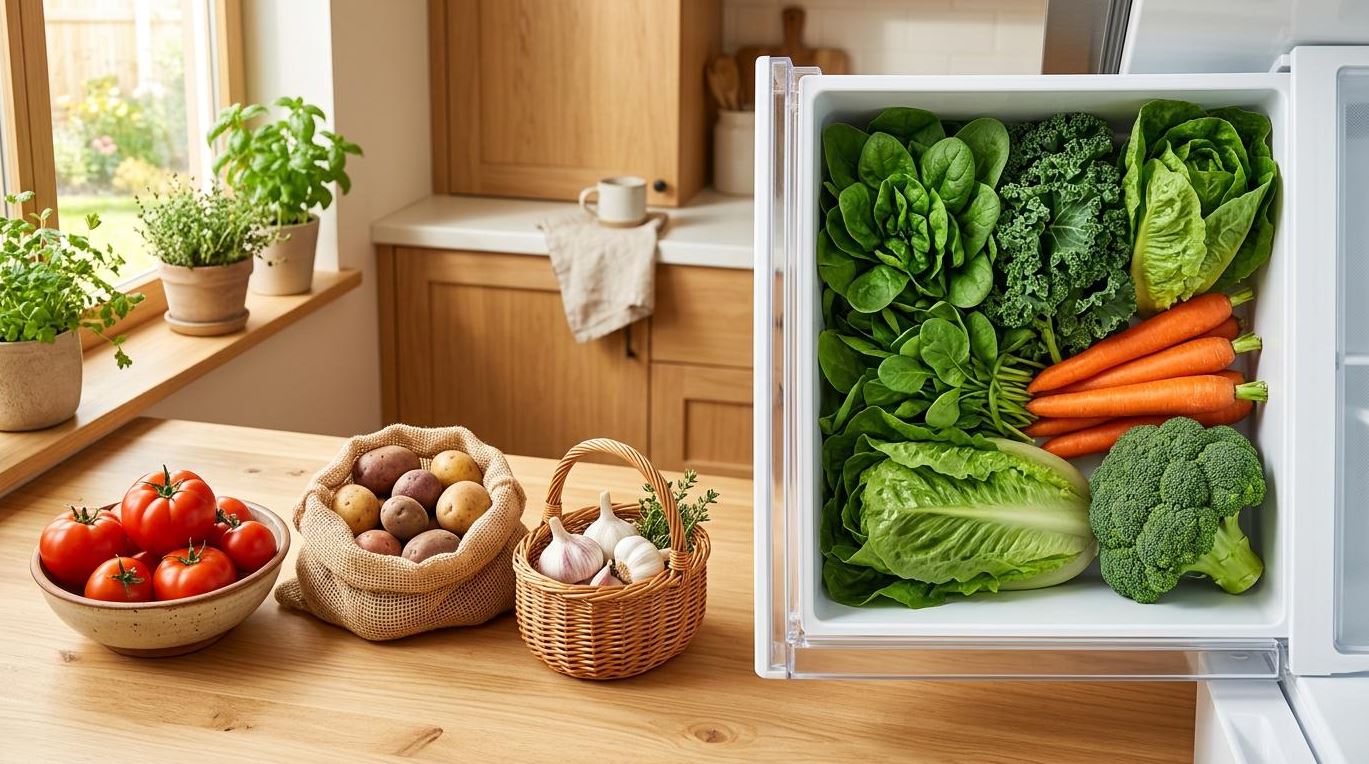
The best way to store vegetables depends on the type of vegetable. Broccoli, spinach, lettuce, carrots and many other fresh vegetables usually keep best in the refrigerator. Whole potatoes, dry onions, garlic and mature winter squash generally prefer suitable cool, dry or well-ventilated storage. Tomatoes, cucumbers, peppers and aubergines need additional care because prolonged cold storage can affect their quality.
Storing all vegetables in the same place is one of the simplest ways to cause avoidable food waste.
For example, leafy greens can wilt when they lose moisture, potatoes can turn green when exposed to light, and certain vegetables may deteriorate faster when stored near ethylene-producing fruit.
Food safety matters too.
In the United States, the Food and Drug Administration (FDA) recommends keeping perishable produce in a refrigerator at 40°F (4°C) or below. In the UK, the Food Standards Agency (FSA) recommends 5°C or below.
This guide explains how to store vegetables to keep them fresh longer, which ones belong in the fridge or cupboard, how to manage moisture and ethylene, when to wash produce, and how to recognise possible spoilage.
It also includes a practical vegetable storage chart for households in both the United States and United Kingdom.
Vegetable Storage Chart: Fridge, Cupboard or Cool Room?
Start with this quick-reference chart.
The recommendations apply primarily to whole, uncut vegetables. Once vegetables are cut, peeled, cooked or sold as ready-to-eat prepared produce, different food-safety rules apply.
| Vegetable | Recommended home storage | Important tip |
|---|---|---|
| Broccoli | Refrigerator | Keep cold and limit moisture loss |
| Cauliflower | Refrigerator | Store dry, with some airflow |
| Lettuce | Refrigerator | Protect leaves from drying out |
| Spinach | Refrigerator | Keep leaves cool; avoid condensation |
| Kale | Refrigerator | Use the crisper drawer or suitable produce bag |
| Cabbage | Refrigerator | Keep the head whole until needed |
| Carrots | Refrigerator | Remove leafy tops if attached |
| Celery | Refrigerator | Prevent moisture loss |
| Radishes | Refrigerator | Remove greens for longer root storage |
| Beetroot / beets | Refrigerator | Remove leaves if storing the roots |
| Brussels sprouts | Refrigerator | Keep cool and use while firm |
| Asparagus | Refrigerator | Use promptly; protect from drying |
| Green beans | Refrigerator | Avoid freezing-cold spots |
| Peas | Refrigerator | Chill soon after buying |
| Leeks | Refrigerator | Keep separated from ready-to-eat foods if visibly soiled |
| Spring onions / scallions | Refrigerator | Protect greens from wilting |
| Potatoes | Cool, dark, dry, ventilated storage | Avoid light and warm locations |
| Sweet potatoes | Cool, dry location, not a cold fridge | Avoid chilling injury |
| Dry onions | Cool, dry, ventilated storage | Avoid damp, sealed bags |
| Garlic | Cool, dry, ventilated storage | Keep whole bulbs dry |
| Shallots | Cool, dry, ventilated storage | Similar to dry onions |
| Winter squash | Suitable cool, dry room | Avoid overly cold conditions |
| Pumpkins | Suitable cool, dry room | Store mature, undamaged fruits |
| Tomatoes | Room temperature while ripening | Refrigerate ripe ones when needed to slow deterioration |
| Cucumbers | Cool conditions where possible | Avoid prolonged very cold storage |
| Courgettes / zucchini | Cool storage; short-term refrigeration if necessary | Sensitive to prolonged chilling |
| Aubergines / eggplants | Cool conditions; use promptly | Sensitive to chilling damage |
| Bell peppers | Cool storage; home fridge often practical | Avoid prolonged exposure to near-freezing conditions |
| Mushrooms | Refrigerator | Store in breathable packaging |
Sources: University of Minnesota Extension, Utah State University Extension, Penn State Extension and FDA produce-handling guidance.
A household refrigerator is excellent for many vegetables, but it is not the ideal temperature and humidity environment for every crop.
For example, commercial produce-storage recommendations for cucumbers and aubergines are warmer than a standard household fridge. If your kitchen is hot, short-term refrigeration may still be the most practical option, although texture and flavour can be affected.
Why Do Vegetables Go Bad in Storage?
Vegetables remain biologically active after harvest.
They continue to respire, lose moisture and undergo changes in their tissues.
Several factors determine how quickly their quality declines.
Temperature
Warmer conditions generally speed up respiration and many deterioration processes.
However, temperatures that are too cold can damage chilling-sensitive vegetables such as aubergines, cucumbers and tomatoes.
Humidity
Leafy greens and many root vegetables need protection from moisture loss.
Dry onions and garlic, by contrast, require conditions that discourage excessive dampness and rot.
Airflow
Ventilation helps reduce trapped moisture and condensation in some storage environments.
A completely sealed container may trap too much water around certain vegetables.
Ethylene Exposure
Ethylene is a natural plant hormone involved in ripening and ageing.
Ethylene-producing fruit can accelerate quality changes in sensitive vegetables stored nearby.
Physical Damage
Bruising, cuts and damaged tissue can increase moisture loss and provide opportunities for decay.
Microbial Contamination
Bacteria, moulds and other microorganisms may be present on produce.
Improper temperature control and handling can increase food-safety risks.
The important distinction is that freshness and food safety are not exactly the same thing.
A vegetable can lose crispness without necessarily becoming unsafe, while harmful microorganisms may sometimes be present without obvious changes in smell or appearance.
Which Vegetables Should Be Stored in the Refrigerator?
Most leafy greens, tender brassicas and many root vegetables benefit from refrigerated storage.
For perishable produce, use a clean fridge at the recommended temperature.
The FDA advises a temperature of 40°F (4°C) or lower.
The UK's Food Standards Agency recommends keeping the fridge at 5°C or below.
Leafy Greens: Lettuce, Spinach, Kale and Rocket
Leafy vegetables can lose moisture quickly.
This causes leaves to become limp or wilted.
For best quality:
Remove visibly damaged or decaying leaves.
Keep the remaining leaves refrigerated.
Use a clean produce bag or suitable container.
Avoid allowing excessive water to collect inside the packaging.
Prepare and wash the leaves before eating, unless the product is labelled ready-to-eat.
If you wash loose leaves in advance for meal preparation, dry them thoroughly before refrigerating and follow safe handling practices.
Broccoli and Cauliflower
Broccoli and cauliflower are best kept cold after purchase.
Store them in the refrigerator, preferably in a produce drawer or suitable perforated bag.
Avoid washing them and leaving them dripping wet before storage.
Excess surface moisture can encourage deterioration.
Use the vegetables while the heads remain firm and sound.
Carrots, Beetroot and Radishes
Fresh roots often store better when their leafy tops are removed.
Leaves can continue drawing moisture from the roots, causing them to soften.
Remove the tops if attached, keep the roots cool and protect them from drying out.
For ordinary household use, the refrigerator is a practical place.
Do not wash muddy roots unnecessarily long before storage if they cannot be dried properly afterwards.
Celery
Celery loses its crisp texture when it loses moisture.
Refrigeration and suitable protective wrapping or packaging can help maintain quality.
Avoid trapping standing water around damaged stalks.
Asparagus
Asparagus is a particularly perishable vegetable.
Refrigerate it promptly and use it relatively soon after purchase.
Keep the cut ends from drying excessively, but avoid leaving the vegetable in dirty or stagnant water.
Peas and Green Beans
Fresh peas and beans generally benefit from being kept cool.
Use a suitable produce bag and avoid overcrowding.
Green beans are somewhat chilling-sensitive, so keep them away from the coldest areas of the refrigerator, where temperatures may approach freezing.
For the best texture and flavour, use tender beans promptly.
Which Vegetables Should Not Normally Be Stored in the Fridge?
Some whole vegetables are better suited to cool, dry, well-ventilated storage.
This applies mainly to mature, uncut storage crops, not prepared or peeled vegetables.
Potatoes
Whole potatoes store best in a cool, dark, dry and ventilated location.
Light exposure can cause greening and may be associated with increased glycoalkaloid concentrations.
Warm conditions can encourage sprouting and deterioration.
A dark cupboard or pantry may work for short-term storage, provided it is not too warm or damp.
A cool cellar or similar suitable space is preferable for longer storage.
Avoid exposing potatoes to direct sunlight.
Safety note: Do not eat potatoes with extensive greening, serious deterioration or substantial damaged and bitter areas.
Dry Onions
Whole, properly cured dry onions prefer cool, dry conditions with ventilation.
Mesh bags, open baskets and ventilated storage containers can help.
Avoid leaving them in sealed, damp plastic bags.
Spring onions or scallions are different: their green, tender tissues are perishable and should generally be refrigerated.
Garlic
Whole garlic bulbs should be kept dry and ventilated.
A cool cupboard or pantry is often appropriate.
Avoid storing whole bulbs in a humid, sealed environment.
Peeled or chopped garlic needs different handling.
Garlic stored in oil can pose a serious botulism risk if prepared or stored incorrectly. Do not leave homemade garlic-in-oil mixtures at room temperature.
Sweet Potatoes
Sweet potatoes are susceptible to chilling injury.
They generally keep better in suitable cool, dry conditions than in a household refrigerator.
Avoid very low temperatures and damp storage.
Once cut or cooked, refrigerate promptly.
Pumpkins and Winter Squash
Mature winter squash and pumpkins can often be stored in a suitable cool, dry and ventilated room.
Store only sound, undamaged produce.
Inspect regularly for soft spots, mould or decay.
Some varieties store longer than others.
Once cut, refrigerate the remaining pieces in a clean, covered container.
How to Store Tomatoes Without Losing Flavour
Tomatoes are a special case because ripening and flavour development are sensitive to temperature.
Unripe Tomatoes
Keep whole, unripe tomatoes at room temperature while they ripen.
Avoid very cold storage during this stage.
Refrigeration may interfere with normal ripening and affect flavour and texture.
Ripe Tomatoes
For tomatoes that are fully ripe and will be eaten very soon, room-temperature storage can help preserve desirable texture and flavour, provided conditions are not excessively hot.
If the tomatoes are very ripe and you need to delay spoilage, refrigeration may be useful.
Allowing refrigerated whole tomatoes to return towards room temperature before serving can improve the eating experience.
Cut Tomatoes
Cut tomatoes should be refrigerated promptly.
Do not leave cut tomatoes on the kitchen counter as though they were still intact, uncut produce.
Bottom line: Whole tomatoes need quality-focused storage according to ripeness; cut tomatoes need refrigeration for safety.
How to Store Cucumbers, Courgettes and Aubergines
These vegetables are sensitive to prolonged exposure to temperatures colder than those ideal for their storage.
Cucumbers
Cucumbers generally prefer moderately cool conditions rather than extremely cold ones.
Cold injury can cause pitting, water-soaked areas and faster deterioration.
In a warm household without a dedicated cool pantry, short-term refrigeration may be reasonable.
Avoid placing cucumbers against freezing-cold fridge surfaces.
Courgettes or Zucchini
Courgettes are summer squash.
They are more delicate than mature winter squash and do not keep well for extended periods.
Use them relatively quickly.
In hot homes, a brief stay in the fridge may be more practical than leaving them on a warm worktop.
Aubergines or Eggplants
Aubergines can develop chilling damage when stored too cold for too long.
A cool environment is preferable for quality, but many homes do not have a separate space maintained at the ideal temperature.
Buy reasonable quantities, use them promptly and avoid prolonged cold storage.
Bell Peppers
Peppers also have temperature and humidity requirements that are warmer than many leafy vegetables.
Refrigeration is often practical for households, but prolonged exposure to very low temperatures can affect quality.
Keep them dry on the surface and avoid placing them where they could freeze.
What Is the Best Way to Use Your Fridge's Vegetable Drawer?
The vegetable drawer, also called a crisper drawer, helps maintain conditions suitable for produce.
Some refrigerators have adjustable humidity settings.
High-Humidity Setting
This is generally useful for produce that loses moisture easily.
Examples include:
Lettuce.
Spinach.
Kale.
Carrots.
Broccoli.
Cauliflower.
Lower-Humidity Setting
This is more suitable for some ethylene-producing fruits or produce that benefits from greater ventilation.
The precise result depends on the refrigerator design.
Practical Fridge Organisation
Keep perishable vegetables in the produce drawer when appropriate.
Avoid packing produce so tightly that airflow is restricted.
Remove spoiled items promptly.
Keep raw meat and poultry contained on the lowest appropriate shelf, away from ready-to-eat vegetables.
Check fridge temperature with a thermometer rather than relying only on the control dial.
Never use the crisper drawer as a substitute for safe refrigeration temperatures.
What Is Ethylene, and Which Vegetables Are Sensitive to It?
Ethylene is a naturally occurring plant hormone that influences ripening and ageing.
Some fruits produce relatively large amounts as they ripen.
Other vegetables may be sensitive to exposure.
Ethylene exposure can contribute to yellowing, softening, bitterness, leaf deterioration and other quality changes.
Utah State University Extension recommends separating ethylene-sensitive vegetables from fruits such as apples, bananas and tomatoes.
Ethylene Producers vs. Sensitive Vegetables
| Common ethylene-producing foods | Vegetables that may be sensitive |
|---|---|
| Apples | Broccoli |
| Ripe bananas | Cauliflower |
| Ripe tomatoes | Lettuce |
| Cantaloupe | Leafy greens |
| Ripening pears | Cucumbers |
| Ripening peaches | Carrots |
| Some ripening avocados | Brussels sprouts |
Sensitivity varies by species, maturity, exposure time and concentration.
This is a general separation guide rather than a claim that every item reacts identically.
Why Should You Separate Apples and Broccoli?
Apples release ethylene.
Broccoli can respond to ethylene exposure by ageing more rapidly, including yellowing of the florets.
To protect quality, avoid storing broccoli directly alongside large amounts of ripening fruit for extended periods.
Do Onions Release Ethylene That Spoils Potatoes?
The popular advice to separate onions and potatoes has some practical value, but not every internet explanation is scientifically precise.
Potatoes require suitable cool, dark storage, while dry onions require ventilation and low moisture.
They are therefore better stored separately where practical.
Ethylene can also influence potato sprouting under some conditions.
However, it is misleading to suggest that an onion always produces enough ethylene to immediately spoil nearby potatoes.
The more reliable advice is to manage storage conditions and avoid keeping either crop in a damp, poorly ventilated pile.
Should You Wash Vegetables Before Storing Them?
For many whole vegetables, washing immediately before preparation is a practical default.
Excess moisture left on produce during storage can contribute to deterioration.
However, there is an important distinction between delaying washing for quality and properly washing produce before it is eaten.
The FDA advises washing produce thoroughly under running water before preparing or eating it.
How to Wash Vegetables Safely
Wash your hands with soap and water before handling produce.
Rinse vegetables under clean running water.
Gently rub the surface to remove visible dirt.
Use a clean produce brush for firm vegetables where appropriate.
Remove damaged or bruised portions.
Dry with a clean towel or paper towel when helpful.
Keep clean produce away from raw meat and contaminated utensils.
Do not wash vegetables with soap, dish detergent, bleach or household cleaning products.
Commercial produce washes are not necessary under FDA guidance.
What About Pre-Washed Salad Bags?
If a sealed product is labelled pre-washed or ready-to-eat, the FDA says it can generally be used without additional washing.
Follow the package's storage instructions.
Once opened, prevent cross-contamination and use it promptly.
How to Store Cut and Prepared Vegetables
Cut vegetables need more careful handling than whole storage crops.
Cutting exposes moist plant tissue and can increase opportunities for contamination.
Refrigerate Promptly
The FDA advises refrigerating peeled or cut vegetables.
For foods requiring refrigeration, its general rule is not to leave them at room temperature for more than two hours, or one hour when temperatures exceed 90°F (32°C).
Follow more specific product directions when provided.
Use Clean, Covered Containers
Put cut vegetables into suitable food-safe containers or bags.
Avoid contact with raw meat or poultry.
Keep Portions Small
Prepare only what you reasonably expect to use.
Cutting every vegetable at the beginning of the week can save time, but some items deteriorate quickly once chopped.
Label the Preparation Date
For home meal preparation, date labels can help you keep track of what needs to be used first.
Don't Assume a Universal Shelf Life
Cut carrots, chopped peppers, shredded cabbage, sliced tomatoes and leafy salads do not all have identical safe storage times.
Packaging, sanitation, temperature and preparation affect quality and safety.
Use product-specific guidance, keep the fridge at the correct temperature and discard food that is unsafe or seriously deteriorated.
How Long Do Fresh Vegetables Last?
There is no single reliable shelf life for every vegetable.
A freshly harvested, undamaged carrot stored under suitable conditions may last considerably longer than a bag of delicate salad leaves.
Some home-grown root vegetables and winter squash may be stored for months under properly controlled conditions, while tender vegetables often need to be eaten much sooner.
Practical Storage Expectations
| Vegetable group | Relative storage potential | Main limitation |
|---|---|---|
| Tender salad leaves | Short | Wilting and decay |
| Asparagus | Short | Rapid quality loss |
| Fresh peas | Short | Quality and sweetness decline |
| Broccoli | Short to moderate | Yellowing and deterioration |
| Green beans | Short to moderate | Moisture loss and chilling damage |
| Carrots | Moderate to long under suitable conditions | Dehydration and decay |
| Whole cabbage | Moderate | Leaf deterioration |
| Whole potatoes | Potentially long in suitable storage | Sprouting, light and temperature |
| Dry onions and garlic | Potentially long when cured and stored correctly | Moisture and rot |
| Mature winter squash | Potentially long, variety-dependent | Damage and unsuitable temperatures |
This is a relative storage guide, not a table of guaranteed safe days.
University of Minnesota Extension notes that vegetable shelf life can decrease considerably when storage conditions differ from the ideal temperature and humidity.
For detailed item-specific storage estimates, consult USDA's FoodKeeper resources or your local university Extension service.
How to Freeze Vegetables for Longer Storage
Freezing can help households preserve vegetables that cannot be eaten before quality declines.
The FDA recommends a freezer temperature of 0°F (−18°C).
Why Blanch Vegetables Before Freezing?
Many vegetables benefit from blanching before freezing.
Blanching means briefly heating the vegetables in boiling water or steam, then rapidly cooling them.
It helps reduce enzyme activity that can otherwise damage colour, flavour and texture during frozen storage.
Oregon State University Extension provides tested instructions for different vegetables.
Examples of Freezing Methods
| Vegetable | General preparation |
|---|---|
| Broccoli | Cut, blanch, cool, drain and pack |
| Green beans | Trim, blanch, cool and freeze |
| Carrots | Prepare and blanch according to size |
| Peas | Shell or trim, blanch and freeze |
| Spinach | Wash, blanch, cool, drain and pack |
| Peppers | Can be frozen chopped; blanching may be optional depending on use |
| Onions | Can be chopped and frozen for cooking |
| Tomatoes | Can be frozen for cooked dishes; thawed texture softens |
| Potatoes | Usually better prepared or partially cooked before freezing |
| Winter squash | Cook and package for freezing |
Follow a tested guide for exact blanching times, because these differ by vegetable and cut size.
Is Freezing Food Indefinitely Safe?
Food kept continuously frozen at 0°F (−18°C) or below can remain safe from a temperature-control perspective, but quality deteriorates over time.
Freezing also does not make contaminated food automatically safe.
Proper cleaning, handling and preparation before freezing remain essential.
How to Tell if Vegetables Have Spoiled
Visible deterioration may indicate that vegetables are past their best or unsafe to eat.
Watch for:
Fuzzy mould growth.
Slime or extensive soft decay.
Unusual liquid leakage.
Strong, unpleasant odours.
Significant discolouration associated with decay.
Deep, spreading rot.
Damaged packaging or evidence of contamination.
However, appearance and smell cannot detect every foodborne pathogen.
Does Wilting Mean a Vegetable Is Unsafe?
Not automatically.
Slightly wilted lettuce or softened carrots may have lost moisture without necessarily developing dangerous contamination.
But if they are slimy, mouldy, badly decayed or have been stored unsafely, discard them.
Can You Cut Mould Off a Vegetable?
Do not assume that removing the visible mould makes every vegetable safe.
Whether trimming is appropriate depends on the food's structure, moisture content and extent of damage.
Soft, high-moisture vegetables with mould should generally be discarded.
When in doubt, avoid trying to salvage questionable produce.
What About Sprouted Potatoes?
Sprouting and greening are reasons for caution.
Do not eat extensively green, bitter or seriously deteriorated potatoes.
Store potatoes in darkness to reduce greening and avoid retaining them after significant deterioration.
Common Vegetable Storage Mistakes
1. Putting Every Vegetable in the Fridge
Some crops are harmed by prolonged cold exposure.
Tomatoes, cucumbers, aubergines, sweet potatoes and mature winter squash need individual consideration.
2. Leaving Leafy Greens on the Counter
Tender greens lose moisture quickly and need refrigeration.
3. Washing Everything and Packing It Wet
Trapped surface moisture may increase deterioration.
Dry produce properly when washing in advance.
4. Using Airtight Bags for Dry Onions
Whole cured onions need suitable ventilation.
5. Keeping Potatoes in Direct Light
Light exposure encourages greening.
Use dark storage.
6. Storing Ripening Fruit With Ethylene-Sensitive Vegetables
Separate foods such as apples and bananas from sensitive vegetables where possible.
7. Ignoring the Fridge Temperature
An overloaded or poorly functioning refrigerator may be warmer than the control setting suggests.
Use a thermometer.
8. Mixing Raw Meat With Ready-to-Eat Produce
Cross-contamination can occur through leaks, hands, cutting boards and utensils.
9. Keeping Cut Vegetables at Room Temperature
Refrigerate cut produce promptly.
10. Relying Entirely on Smell
Food can contain harmful microorganisms without smelling spoiled.
Follow safe handling and storage practices.
US vs. UK Vegetable Storage: Are the Rules Different?
The underlying biology of vegetables does not change between countries.
However, official guidance, terminology and typical homes may differ.
| Topic | United States | United Kingdom |
|---|---|---|
| Vegetable storage area | Refrigerator, pantry, crisper drawer | Fridge, cupboard, crisper drawer |
| Refrigeration guidance | FDA: 40°F (4°C) or below | FSA: 5°C or below |
| Freezer reference | 0°F (−18°C) | Approximately −18°C |
| Zucchini | Zucchini | Courgette |
| Eggplant | Eggplant | Aubergine |
| Rutabaga | Rutabaga | Swede |
| Beets | Beets | Beetroot |
| Green onions | Scallions / green onions | Spring onions |
For safe food handling, UK readers should follow the Food Standards Agency and NHS guidance.
American readers should use FDA, USDA and relevant state Extension information.
Because some vegetables have ideal storage temperatures that fall between room temperature and refrigerator temperatures, both countries face similar household compromises.
How to Organise Your Vegetables After Grocery Shopping
Use a simple system to reduce unnecessary waste.
Step 1: Separate Whole and Cut Produce
Put cut or prepared vegetables into the fridge promptly.
Step 2: Put Perishable Greens Away First
Refrigerate lettuce, spinach, broccoli and other perishable vegetables.
Step 3: Sort Dry Storage Crops
Place whole dry onions, garlic, potatoes and sound winter squash in appropriate separate, ventilated locations.
Step 4: Check Ripening Produce
Decide whether whole tomatoes should continue ripening at room temperature or be refrigerated because they are already fully ripe.
Step 5: Keep Ethylene-Sensitive Foods Apart
Avoid placing broccoli or other sensitive vegetables directly alongside ripening apples or bananas for prolonged periods.
Step 6: Plan Meals Around the Most Perishable Items
Use asparagus, salad greens and tender produce earlier.
Save suitable storage vegetables for later.
Step 7: Inspect Regularly
Remove spoiled items before decay spreads to neighbouring produce.
Frequently Asked Questions About Storing Vegetables
What is the best way to store vegetables?
Store vegetables according to their individual temperature, moisture and ventilation needs. Refrigerate perishable greens and cut produce, and keep suitable whole storage crops in cool, dry or dark conditions.
Should all vegetables go in the fridge?
No. Whole potatoes, dry onions, garlic, sweet potatoes and mature winter squash generally have different ideal storage requirements from leafy greens.
What temperature should a vegetable fridge be?
The U.S. FDA recommends 40°F (4°C) or below for perishable produce. The UK FSA recommends 5°C or below for household refrigerators.
Which vegetables should be kept in the cupboard?
Whole cured onions, garlic, potatoes and certain mature winter squash may be kept in a suitable cool, dry and ventilated storage area. Actual conditions matter.
Should potatoes be refrigerated?
Potatoes are generally best stored in a cool, dark and ventilated place suited to the crop. Household refrigerators may be colder than the ideal long-term quality storage temperature.
Should onions be refrigerated?
Whole, cured dry onions generally prefer a dry, ventilated location. Cut onions should be refrigerated.
Should garlic be refrigerated?
Whole garlic bulbs generally store well in dry, ventilated conditions. Peeled or chopped garlic requires more careful handling.
Should tomatoes be kept in the fridge?
Unripe tomatoes generally ripen better at room temperature. Refrigeration can help extend the life of fully ripe tomatoes, but may affect flavour and texture. Cut tomatoes require refrigeration.
Should cucumbers go in the fridge?
Cucumbers prefer moderately cool conditions and can suffer chilling injury. Short-term refrigeration may be practical in warm homes, but prolonged very cold storage can reduce quality.
Should courgettes be refrigerated?
Courgettes are chilling-sensitive. Use them promptly and choose short-term cool storage suited to household conditions.
How should broccoli be stored?
Keep broccoli refrigerated, protect it from moisture loss, and avoid prolonged storage near ethylene-producing fruit.
How do you keep lettuce fresh longer?
Keep it refrigerated, minimise moisture loss and avoid excessive condensation. Remove deteriorating leaves and use clean packaging.
How should carrots be stored?
Remove leafy tops if attached and refrigerate the roots in suitable packaging to limit moisture loss.
Should vegetables be washed before refrigeration?
Many whole vegetables can be washed just before use. If washing in advance, dry them thoroughly and store them appropriately.
Can you wash vegetables with dish soap?
No. The FDA advises against washing produce with soap, detergent or commercial produce washes.
Should pre-washed salad leaves be washed again?
Packaged produce clearly labelled ready-to-eat or pre-washed can generally be used without rewashing. Follow the package directions.
How long can cut vegetables stay out?
FDA guidance for perishables requiring refrigeration uses a two-hour limit at room temperature, reduced to one hour above 90°F (32°C).
Why do vegetables turn yellow in the fridge?
Yellowing can result from ageing, ethylene exposure, storage conditions and other factors. Broccoli is particularly sensitive to quality changes during storage.
Which fruits should not be stored with vegetables?
Ethylene-producing fruits such as apples, ripe bananas and tomatoes are best separated from sensitive vegetables, especially during prolonged storage.
Is it safe to eat wilted vegetables?
Wilting alone may indicate moisture loss rather than unsafe food, but slimy, mouldy, seriously decayed or improperly stored vegetables should be discarded.
Can you freeze fresh vegetables?
Yes. Many vegetables freeze well after appropriate preparation. Most benefit from blanching, while certain vegetables can be frozen without it.
Does freezing destroy bacteria?
Freezing generally slows or stops microbial growth while food remains frozen, but it does not reliably eliminate all harmful microorganisms.
Is the freezer temperature the same in the UK and US?
Both commonly use approximately −18°C as a freezer storage reference, equivalent to 0°F.
How can I make vegetables last longer without plastic?
Use clean, breathable containers, suitable reusable produce bags, appropriate fridge humidity and proper dry storage for crops that don't need refrigeration.
How do I prevent vegetable waste?
Buy realistic quantities, refrigerate perishable produce promptly, store different crops appropriately, check your supplies regularly, and cook or freeze vegetables before they deteriorate.
Conclusion
To keep vegetables fresh longer, match the storage method to the vegetable instead of treating all produce the same way.
Leafy greens, broccoli, carrots and many other perishable vegetables generally benefit from refrigeration. Whole potatoes, dry onions, garlic and mature winter squash need suitable conditions that balance temperature, moisture, light and ventilation.
Tomatoes, cucumbers, courgettes and aubergines require additional attention because prolonged cold exposure can damage their quality.
Food safety is equally important.
Keep the refrigerator at an appropriate temperature, refrigerate cut produce promptly, wash vegetables under running water before preparation, and prevent cross-contamination.
You should also separate ethylene-sensitive vegetables from ripening fruit when practical.
No storage method can keep every vegetable fresh indefinitely, but a few sensible habits can reduce spoilage, save money and make everyday meal preparation easier.
The simplest approach is to refrigerate what is perishable, ventilate what needs dry storage, and use the most delicate vegetables first.